Here’s why helmets matter in plain numbers: about 800,000 people suffer head injuries every year in Pakistan, 60,000 to 70,000 of them serious, and road traffic accidents are the single biggest cause. Most of those accidents involve a motorbike.
Why Helmets Matter on Punjab’s Roads
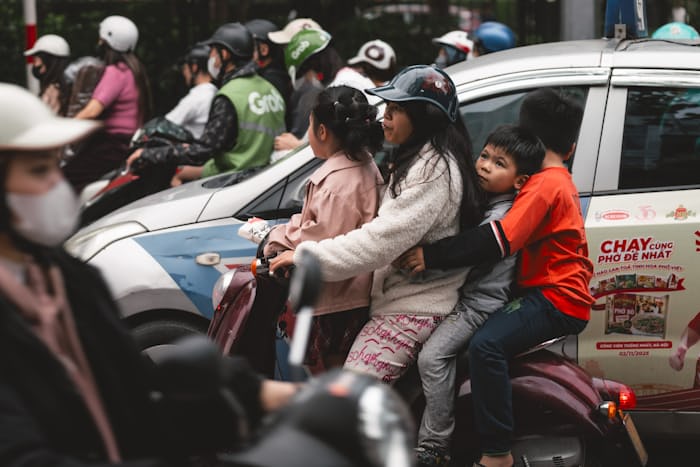
Walk out onto any road in Faisalabad at rush hour and count the bikes. It won’t take long before you lose count. The motorbike is the default vehicle for most Punjabi households, not a backup option, the way it might be somewhere else. It carries the husband to work, the wife to the bazaar, the kids to school, sometimes all at once, one adult driving, a child squeezed in the middle, another balanced in front on the tank. Helmets, when they’re worn at all, usually go on the rider. The rest of the family rides bare-headed, and even the rider often skips it for the “short” trip, down to the corner shop, to drop a child off, to a relative’s house two streets away.
That instinct, that a five-minute ride doesn’t need a helmet, is exactly where the numbers below tell a different story.
The Real Head Injury Numbers in Pakistan
These figures come from published epidemiological research on head trauma in Pakistan, not estimates.
| What the data shows | Why it matters |
|---|---|
| ~800,000 people suffer head injuries every year in Pakistan | That’s roughly the population of a small city, injured every single year |
| 60,000 to 70,000 of those injuries are serious | Not bumps and bruises, injuries that need real medical care |
| Road traffic accidents are the leading cause | More than falls, more than assaults, more than any other cause combined |
| In a 4-year hospital study, 32% of patients needed surgery | Roughly 1 in 3 patients admitted with a head injury ended up on an operating table |
| Half of those surgeries were for a depressed skull fracture | A piece of broken skull pressed inward against the brain, exactly the kind of injury a helmet is built to prevent |
| 75% of patients are male, and the peak age is 10 to 29 | The people most likely to be hurt are the same people most likely to be riding a bike, often without a helmet |
Read that middle row again. Roughly a third of people admitted to hospital with a head injury in that study needed an operation, and half of those operations were specifically to fix a section of skull that had been pushed inward, into the brain itself. That is not a minor injury that heals with rest. That is neurosurgery.
Who Actually Gets Hurt
The 75% male, age 10 to 29 pattern in the data lines up almost exactly with who’s riding motorbikes on Punjab’s roads every day: young men commuting to college, to jobs, to see friends, often the household’s only rider, often the one who feels most invincible on two wheels. It’s not that older riders or women and children are immune, they’re not, but the data is clear about where the heaviest burden falls. If there’s one motorbike helmet in a household, it usually belongs on exactly the person these numbers describe.
“It’s Just a Short Trip” Is the Riskiest Thinking
Almost nobody plans to have a serious accident. That’s precisely why short, familiar routes feel safe enough to skip the helmet, the market run, the school pickup, the lane you’ve ridden a thousand times. But a head injury doesn’t require a highway or high speed. A pothole, a sudden stop, another bike merging without looking, a patch of oil near a workshop, any of these can put a rider on the ground at a speed that’s more than enough to fracture a skull. The ride that “doesn’t count” is, statistically, no different from any other ride. It’s just the one where the helmet was left on the hook by the door.
What a Helmet Actually Does
A helmet doesn’t make an accident less likely to happen. What it does is change what happens to the head when it does. A properly fastened helmet absorbs and spreads the force of an impact instead of letting it transfer directly to the skull and brain, the difference between a headache and a hospital admission, sometimes between walking out and not walking out at all. This is basic physics, not a guarantee, but it is the single most effective tool available to reduce how serious a head injury turns out to be.
If a Head Injury Happens Anyway
No helmet makes an accident impossible, so it’s worth knowing the warning signs that mean emergency care, not a wait-and-see approach: loss of consciousness even briefly, repeated vomiting, worsening confusion or drowsiness, a seizure, unequal pupils, or fluid leaking from the nose or ears. Any of these means the emergency room immediately.
Urdu Summary (خلاصہ)
پاکستان میں ہر سال تقریباً 800,000 افراد سر کی چوٹ کا شکار ہوتے ہیں، جن میں سے 60,000 سے 70,000 شدید ہوتی ہیں، اور روڈ ایکسیڈنٹ اس کی سب سے بڑی وجہ ہے۔ ایک تحقیق کے مطابق ہسپتال میں داخل مریضوں میں سے 32 فیصد کو آپریشن کی ضرورت پڑی، اور ان میں سے آدھے کھوپڑی کی ٹوٹی ہوئی ہڈی دماغ پر دباؤ ڈالنے کی وجہ سے۔ سب سے زیادہ متاثر نوجوان مرد ہیں، عمر 10 سے 29 سال کے درمیان، بالکل وہی لوگ جو موٹر بائیک سب سے زیادہ چلاتے ہیں۔ ہیلمٹ پہننا، چاہے سفر کتنا ہی مختصر کیوں نہ ہو، اس چوٹ کی شدت کو کم کرنے کا سب سے مؤثر طریقہ ہے۔
Frequently Asked Questions
Why do helmets matter so much for motorbike riders in Pakistan?
Because road traffic accidents are the leading cause of head injury in the country, and motorbikes are the most common vehicle on Punjab’s roads. A helmet is the single most effective way to reduce how serious a head injury turns out to be when an accident happens.
How common are head injuries in Pakistan?
Around 800,000 people suffer head injuries every year in Pakistan, and 60,000 to 70,000 of those are serious enough to need significant medical care, according to published epidemiological research.
Do most people with a head injury need surgery?
Not most, but a meaningful share do. In a 4-year hospital study, 32% of patients admitted with a head injury needed surgery, and half of those operations were for a depressed skull fracture.
Helmet na pehnne se sar ki chot kitni serious ho sakti hai?
Bahut serious. Studies show roughly one in three hospital-admitted head injury patients needed surgery, and a depressed skull fracture, exactly the kind of injury a helmet helps prevent, accounted for half of those cases.
Who is most at risk of a serious head injury on the road?
The data shows 75% of patients are male, with the peak age between 10 and 29, closely matching who rides motorbikes most often in Pakistan.
Want this looked at? Dr. Saud Ahmed sees patients in Faisalabad, Gojra, and Sangla Hill. Book an appointment or call/WhatsApp 0313-8966559.