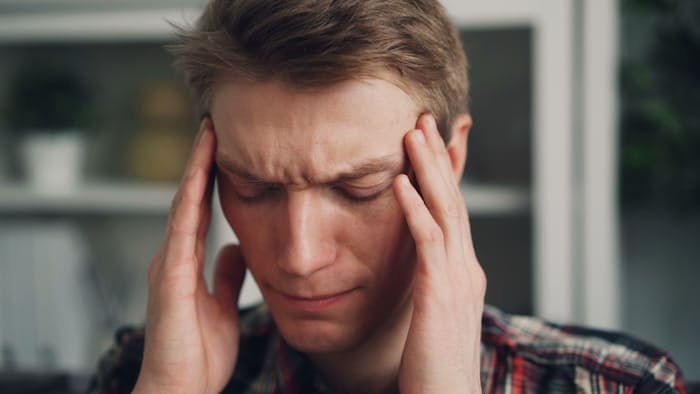
Is my headache a brain tumor? Almost certainly not. The overwhelming majority of headaches, including severe and recurring ones, come from tension, migraine, eye strain, dehydration, or stress, not from a tumor. A tumor headache follows a specific pattern, and this article explains exactly what that pattern looks like.
Is My Headache a Brain Tumor? The Honest Answer First
If you have searched this question at two in the morning after a bad sar dard, you are far from alone. It is one of the most common fears patients bring into a neurosurgery clinic, and the answer is almost always the same: this is not a tumor.
Headache is one of the most common complaints in all of medicine. Brain tumors are, by comparison, uncommon. Most people who walk into a clinic worried about a dimagh ka rasoli turn out to have a tension headache, a migraine, an untreated refractive error in their glasses prescription, a sinus problem, poorly controlled blood pressure, or simply months of bad sleep and long hours in front of a screen. In Faisalabad’s summer, plain dehydration accounts for a striking number of headaches that arrive at clinic looking frightening to the patient.
That is genuine reassurance, not a brush-off. But reassurance is only worth something if it comes with a clear description of when the answer is different. So here is that description, in plain terms.
What a Brain Tumor Headache Actually Looks Like
Doctors do not worry about a headache because it hurts a lot. Migraines can be agonizing and are completely harmless to the brain. What raises concern is a change in pattern along with other neurological symptoms. The picture that prompts a scan usually includes some combination of the following.
It is new, or it is different. A headache you have had on and off for fifteen years is reassuring by its own history. A headache that started recently in someone who never used to get headaches, particularly over the age of forty, deserves attention. So does a long-standing headache that has clearly changed its character, location, timing, or severity.
It is worse in the morning or when lying down. This is the single most characteristic feature. Pressure inside the skull rises slightly when you lie flat, so a headache caused by something taking up space inside the head often peaks on waking and eases after you have been upright for an hour. Bending forward, coughing, straining, or lifting something heavy may make it briefly worse.
It is progressive. Not the same intensity every week, but noticeably and steadily worse over weeks to a couple of months.
It comes with vomiting, especially vomiting that arrives without much nausea beforehand, and especially in the morning.
It comes with neurological changes. This is the part that matters most. Blurred or double vision, a shrinking field of vision, weakness or numbness on one side of the body, difficulty with speech, unsteadiness or a change in walking, or a first-ever seizure in an adult.
Personality or thinking has changed. Often the family notices this before the patient does. Unusual irritability, apathy, confusion, memory slipping, or a person who simply is not behaving like themselves.
When to Worry About a Headache, and When Not To
Two conditions cause the majority of headaches, and neither one behaves like a tumor.
A tension headache feels like a tight band or pressure around the head, is usually mild to moderate, is often worse by evening after a long day rather than on waking, and responds to rest, hydration, and a simple painkiller. It does not come with weakness, vision loss, or seizures.
A migraine is often one-sided, throbbing, and can be genuinely disabling, with nausea, vomiting, and sensitivity to light and sound. Migraines can even produce temporary visual disturbances or tingling, which frightens people badly. The key difference is that a migraine comes in discrete attacks with completely normal periods in between, has usually been happening for years in a recognizable pattern, and resolves fully. A tumor does not give you a normal week off.
Who Should You Actually See?
This is where a lot of time and money gets wasted in Pakistan, with patients going straight to a surgeon for something that never needed one, or delaying a scan because they did not know who to ask.
| Your situation | Who to see first |
|---|---|
| Recurring headache, no warning signs | General physician, then a neurologist if it does not settle |
| Diagnosed migraine needing better control | Neurologist |
| Headache with any warning sign listed above | See a doctor promptly and expect a scan to be arranged |
| A scan has already shown a tumor or mass | Neurosurgeon |
| Sudden “worst headache of my life”, or headache with weakness, seizure, or loss of consciousness | Emergency room now, do not wait for an appointment |
A neurologist manages headache disorders with medication and is usually the right specialist for migraine, cluster headache, and chronic daily headache. A neurosurgeon becomes the right person once imaging shows something structural that may need an operation. If you are unsure which one applies to you, our guide on choosing between a neurologist or neurosurgeon in Faisalabad walks through it by symptom.
Headache Warning Signs That Mean Go to Emergency Now
Do not wait for a clinic appointment if any of these happen:
- A sudden, explosive headache that reaches maximum intensity within seconds
- A headache with a first-ever seizure or fit
- A headache with new weakness, facial droop, or slurred speech
- A headache with a stiff neck and high fever
- A headache after a head injury that keeps worsening
- Any headache with increasing drowsiness or difficulty waking someone up
These patterns can indicate bleeding, infection, or dangerously raised pressure inside the skull, and they are treated as emergencies regardless of what the underlying cause turns out to be. Our list of warning signs that mean you should see a neurosurgeon covers this in more detail.
If a Scan Is Recommended, That Is Not Bad News
Patients often hear “we should get an MRI” and assume the doctor already suspects the worst. Usually the opposite is true. A scan is frequently ordered precisely to close the question, so that a headache can be treated properly without the fear sitting underneath it. Most brain scans done for headache come back normal.
And if something is found, finding it is the good outcome, not the bad one. Many brain tumors are benign, many are treatable, and options range from monitoring to medication to surgery depending entirely on the type, size, and location. That conversation belongs with a neurosurgeon who can look at your actual images. You can read about the surgical side on our brain tumor surgery page.
Dr. Saud Ahmed, MBBS, FCPS (Neurosurgery), sees patients at Aziz Fatima Hospital and Siddique Hospital in Faisalabad, at Doctor Hospital Gojra on Tuesdays, and at Sangla Hill by appointment. The consultation fee is Rs. 1,500 at all locations. If you already have a scan report, you can send it on WhatsApp to 0313-8966559 before booking.
Urdu Summary (خلاصہ)
اکثر سر درد کا تعلق دماغ کی رسولی سے نہیں ہوتا۔ زیادہ تر سر درد ذہنی دباؤ، مائیگرین، نظر کی کمزوری، پانی کی کمی یا نیند کی کمی کی وجہ سے ہوتا ہے۔ فکر کی بات تب ہے جب سر درد نیا ہو، صبح اٹھتے وقت یا لیٹنے پر زیادہ ہو، ساتھ الٹی آئے، نظر دھندلی ہو، جسم کے ایک طرف کمزوری ہو، دورہ پڑے، یا مریض کے مزاج اور یادداشت میں تبدیلی آئے۔ ایسی صورت میں فوراً ڈاکٹر سے رجوع کریں اور اسکین کروائیں۔ اچانک شدید سر درد یا دورے کی صورت میں سیدھا ایمرجنسی جائیں۔
Frequently Asked Questions
How likely is it that my headache is a brain tumor?
Very unlikely. Headache is extremely common and brain tumors are not. In the absence of the warning signs described above, particularly a headache that is worse on waking, progressive, and accompanied by vomiting, vision changes, weakness, seizures, or personality change, a tumor is a remote explanation.
Kya rozana ka sar dard dimagh ki rasoli ki nishani hai?
Usually not. A daily headache is far more often tension-type headache, medication overuse headache, uncontrolled blood pressure, or an eyesight problem. It is still worth getting evaluated so it can be treated properly, but daily headache on its own is not a tumor pattern.
Does a brain tumor headache respond to painkillers?
It may partly respond early on, so relief from a tablet does not rule anything out by itself. What matters more is the overall pattern: whether the headache is worsening week by week, whether it is worst in the morning, and whether any neurological symptom has appeared alongside it.
Should I get an MRI just to be sure?
Not automatically. A doctor decides based on your history and a neurological examination, and most people with headache do not need imaging. If your examination is normal and there are no warning signs, a scan usually adds anxiety rather than answers. If a warning sign is present, imaging should not be delayed.
Can stress and lack of sleep really cause a headache this bad?
Yes, and routinely. Tension headache and migraine can both be severe enough that patients genuinely believe something catastrophic is happening. Severity alone is not what doctors use to judge risk. Pattern, progression, and accompanying neurological signs are.
Want this looked at? Dr. Saud Ahmed sees patients in Faisalabad, Gojra, and Sangla Hill. Book an appointment or call/WhatsApp 0313-8966559.